
Hysteroscopy
Obstetrics and Gynecology Associates Of Central Florida
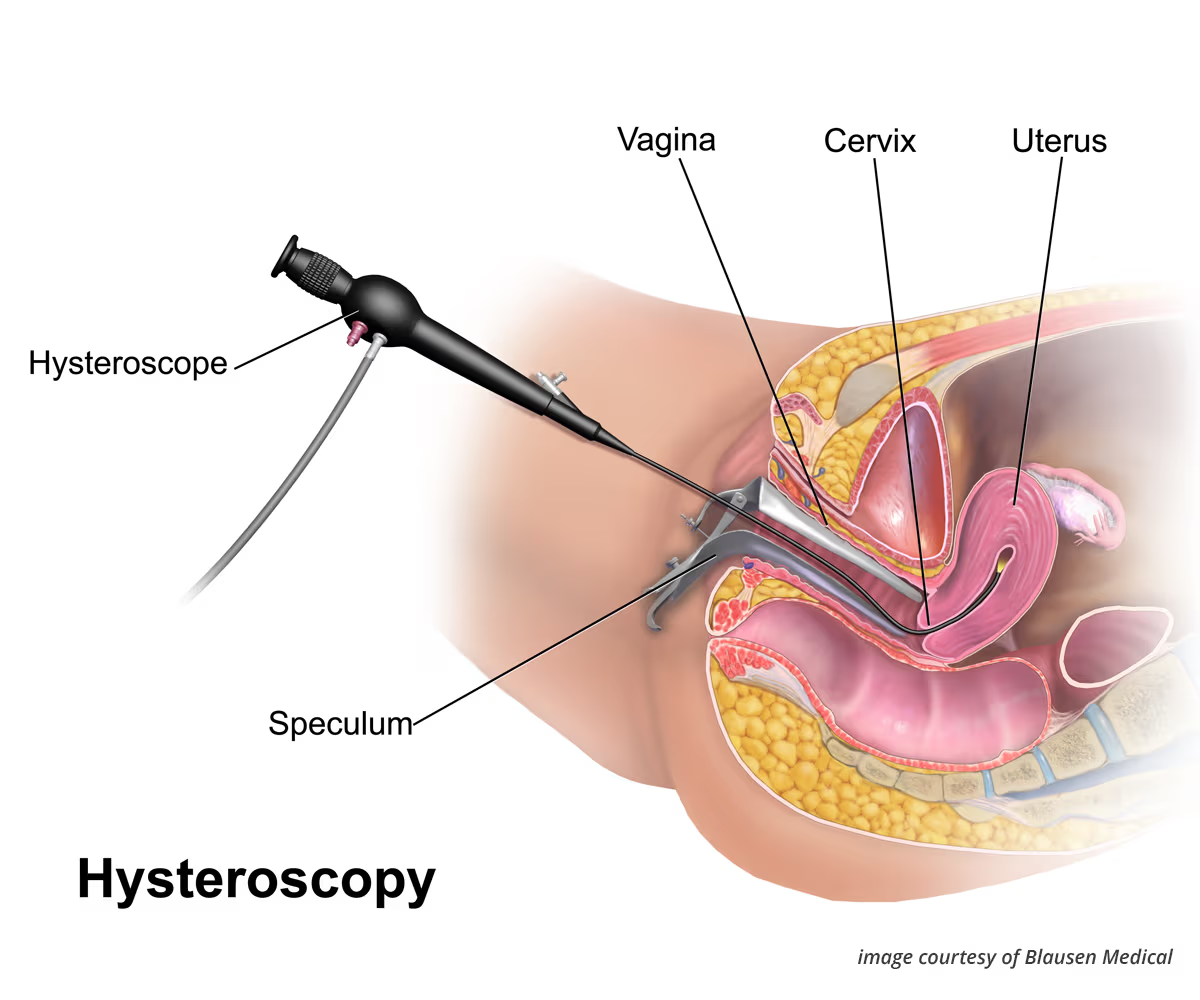
Hysteroscopy: Procedure Overview
Hysteroscopy is a minimally invasive procedure that allows your healthcare provider to look inside the uterus using a thin, lighted instrument called a hysteroscope. The hysteroscope is gently inserted through the cervix into the uterus, so no incisions are required.
Hysteroscopy may be used to diagnose or treat conditions such as:
- Abnormal uterine bleeding
- Uterine polyps
- Fibroids
- Scar tissue (adhesions)
- Retained tissue after miscarriage
- Uterine septum or structural abnormalities
In some cases, hysteroscopy is purely diagnostic (to look and evaluate). In other cases, small surgical instruments can be used during the procedure to treat the problem at the same time.
Frequently Asked Questions (FAQ)
Why would I need a hysteroscopy?
Your provider may recommend hysteroscopy if you have:
- Heavy or irregular menstrual bleeding
- Bleeding between periods
- Postmenopausal bleeding
- Recurrent miscarriages
- Abnormal ultrasound findings
- Difficulty getting pregnant
How is hysteroscopy performed?
During the procedure:
- You will lie on an exam table similar to a pelvic exam
- The cervix may be gently dilated
- The hysteroscope is inserted through the cervix into the uterus
- Sterile fluid is used to expand the uterus for better visibility
- If needed, small instruments can remove polyps, fibroids, or tissue
The procedure typically takes 10–30 minutes, depending on whether treatment is performed.
Is hysteroscopy painful?
You may feel mild cramping similar to menstrual cramps. Some procedures are done:
- In the office with local anesthesia
- With oral medication
- In a surgical center with sedation or general anesthesia
Your provider will recommend the most appropriate option for you.
Do I need anesthesia?
It depends on the type of hysteroscopy:
- Diagnostic hysteroscopy may require little or no anesthesia
- Operative hysteroscopy (removal of polyps/fibroids) may require sedation or general anesthesia
Is hysteroscopy surgery?
It is considered a minimally invasive surgical procedure when treatment is performed, but it does not require abdominal incisions.
What is recovery like?
Most patients:
- Return to normal activities within 1–2 days
- Experience mild cramping
- Have light spotting for a few days
Your provider may recommend avoiding intercourse, tampons, and douching for a short period.
Are there risks?
Hysteroscopy is very safe, but rare risks include:
- Infection
- Bleeding
- Uterine perforation
- Fluid imbalance
Your provider will review risks prior to the procedure.
Are there risks?
Hysteroscopy is very safe, but rare risks include:
- Infection
- Bleeding
- Uterine perforation
- Fluid imbalance
Your provider will review risks prior to the procedure.
Will hysteroscopy affect fertility?
In many cases, hysteroscopy can improve fertility by removing polyps, fibroids, or scar tissue that interfere with implantation.
Can I drive myself home?
If no sedation is used, you may be able to drive yourself. If sedation or anesthesia is given, you will need someone to drive you home.
Is hysteroscopy covered by insurance?
Most insurance plans cover hysteroscopy when medically indicated. Coverage varies by plan.
When should I call my provider after the procedure?
Contact your provider if you experience:
- Heavy bleeding (soaking a pad every hour)
- Severe abdominal pain
- Fever over 100.4°F
- Foul-smelling discharge